
What is the C.A.R.E.S. Model?
Reviewing the body of work of evidence-based and best practices in child welfare, Family-Centered Practice and Wraparound are two of the best known. Family-Centered Practice is a way of working with people that values individuals and family. It ensures safety, permanency, and well-being through eliciting family involvement, building on strengths and utilizing the family’s values, culture and preferences. Their emphasis on key principles are relevant not only in our work with children and families, but we felt applied to all our work. We approach agencies, professionals, our team, and the families with whom we work, in a framework we are pioneering.
The C.A.R.E.S. Model represents this framework for how Collaboration, Affirmation, Respect, Empathy and Support wrap around our work and interactions with others.
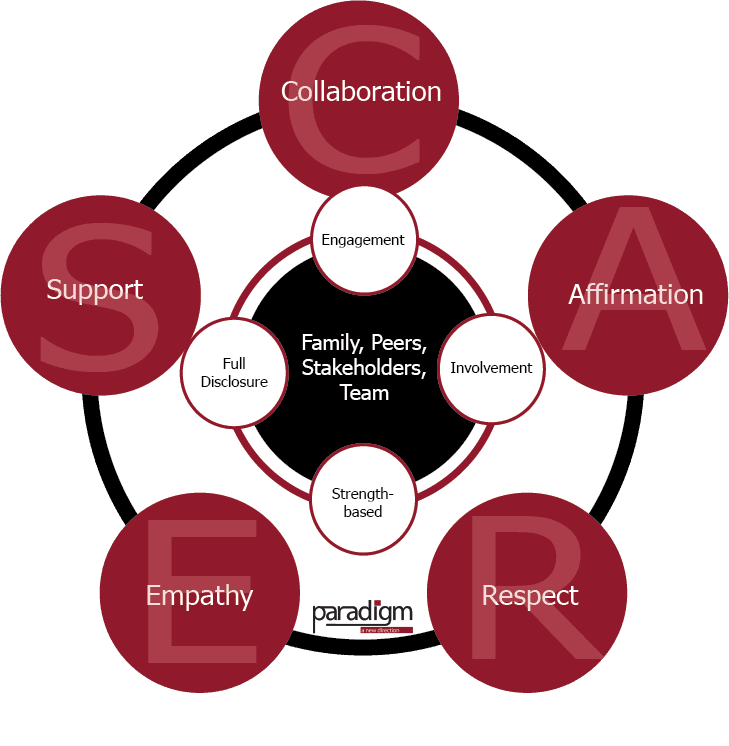
From individuals to families to peers to communities, C.A.R.E.S. is the skillset that strengthens every connection.
Partnering Skills: skills to initiate, build rapport, and collaborate with families.
Listening Skills: skills for reflective and active listening techniques to gather information from the families and used throughout sessions to gain understanding.
Focusing Skills: skills to keep sessions focused and on track, even during emotional or problem situations.
Resolution Skills: skills to help the family take the next steps in resolving their issues that lead to the safety concerns.

